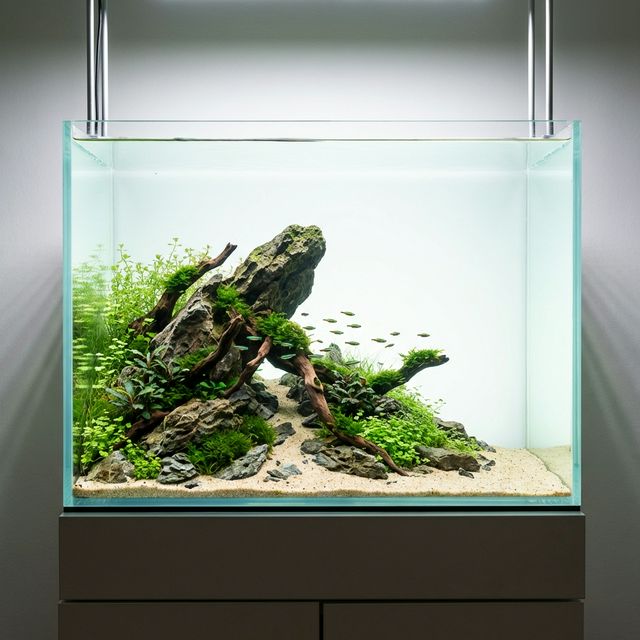
The 5 Golden Rules for a Natural and Impactful Hardscape
Transform your aquarium into a living work of art by mastering the art of arranging rocks and driftwood with harmony and realism.
Often, our natural inclination for order and symmetry hinders the creation of a visually convincing aquatic ecosystem. In nature, beauty lies in controlled irregularity — in "organized chaos." The secret of professional aquascaping is not just stacking stones, but telling a story of erosion and time through the hardscape.
In this guide, we explore the principles that transform a simple setup into an environment that looks like it was plucked directly from a natural river or slope.
Quick Navigation Guide:
1. Diversify Sizes to Create Realism
Think of the power of water: in a natural environment, the current displaces small pebbles and keeps imposing rocks in place. To replicate this effect, your layout should contain a clear hierarchy: guide stones (large), support stones (medium), and detail stones (small).
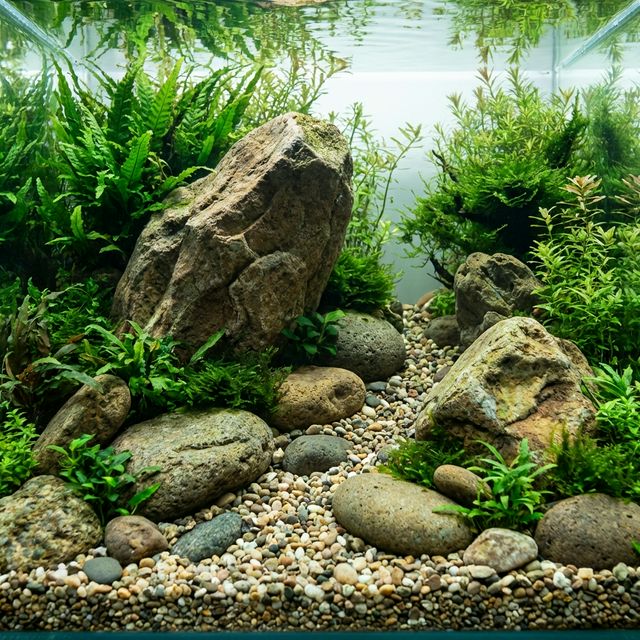
The golden rule is: if you think you already have small enough stones, add more. It's the tiny sizes that give the final scale to your scenery.
2. Avoid Symmetry: Work with Rock Clusters
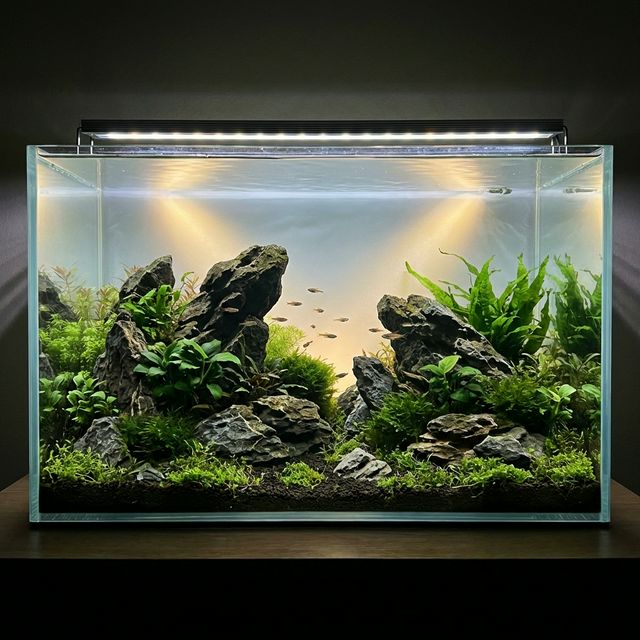
The biggest mistake for a beginner is distributing elements equally throughout the aquarium. For an authentic design, concentrate the hardscape into groups. These clusters create visual interest points and shadow areas that are fundamental for the natural behavior of the fauna.
3. Directional Design Following a Flow
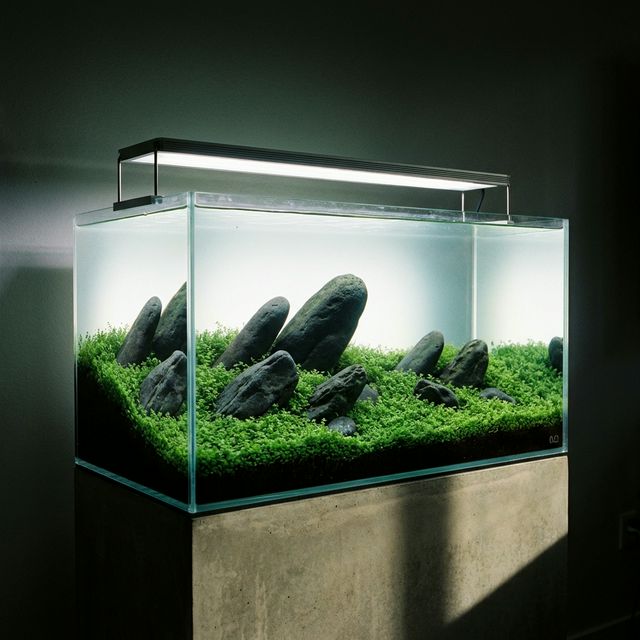
Stones pointing in random directions create visual confusion. Choose a predominant direction — as if an invisible current were sculpting the scenery. Whether in a radiant Iwagumi style or a triangular layout, directional cohesion is what brings peace to the viewer.
4. Enrich the Scenery with Detail Layers
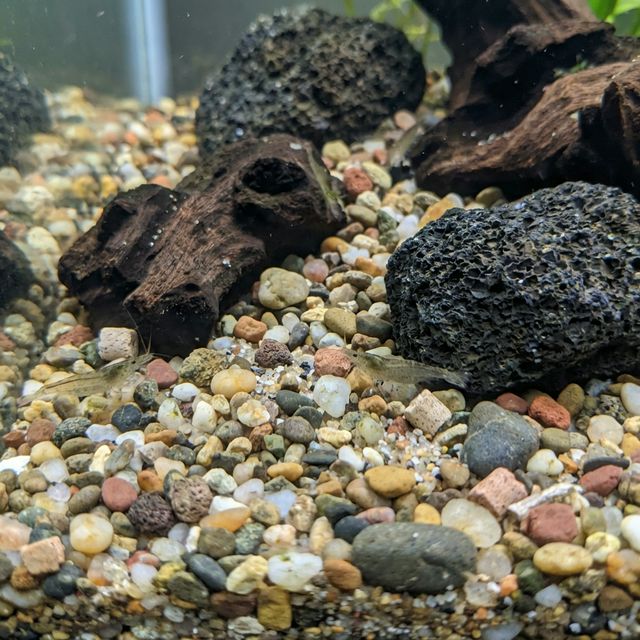
The transition between large rocks and the substrate should not be abrupt. Use small fragments of the crushed rock itself or gravel of similar colors to create a smooth transition. This simulates the natural degradation process and adds an extra layer of depth.
5. Master Perspective and Negative Space
Don't be afraid of the void. "Negative space" in an aquarium is just as important as the hardscape itself. It gives "breathing room" to the composition and helps create a sense of vastness, even in small tanks. Plan your setups considering the real scale of your aquarium.